Paint, Run, Paint
Learning to live with a limp.

1Paint, run, paint used to be my mantra, my daily practice, even my identity. One of the first things people often ask me is: “Are you still running?”
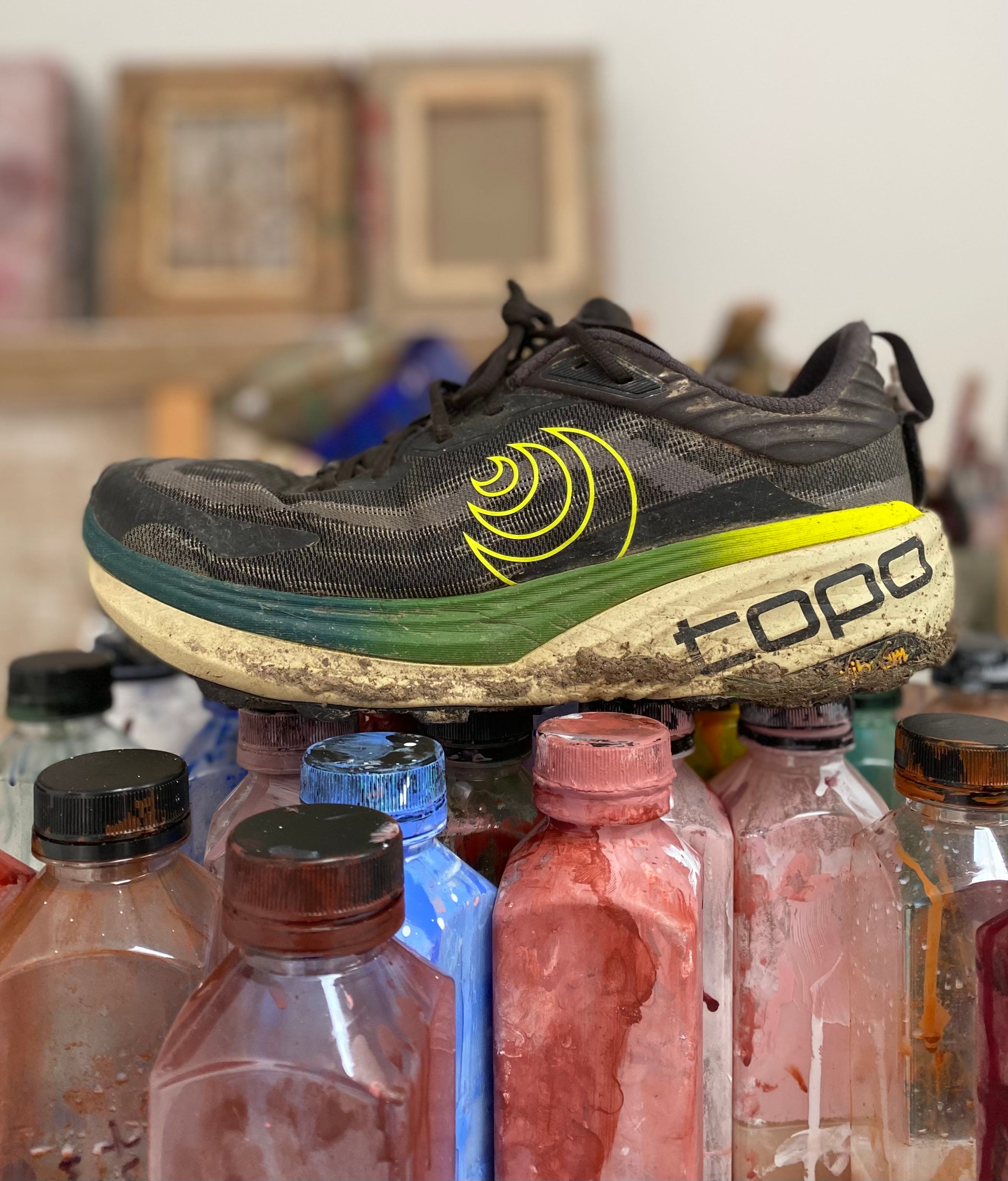
I suppose it goes without saying that I’m still painting. Asking me if I still paint would be like asking if I still breathe.
To put this in context: I ran a lot. Usually between fifty and seventy miles a week, sometimes more. Twenty- to thirty-mile runs at the weekend were normal, and occasionally I would do this on both days. Running was so embedded in my life that “Paint, Run, Paint” was not metaphorical at all. It was a fairly literal description of how I lived.
Then things changed.
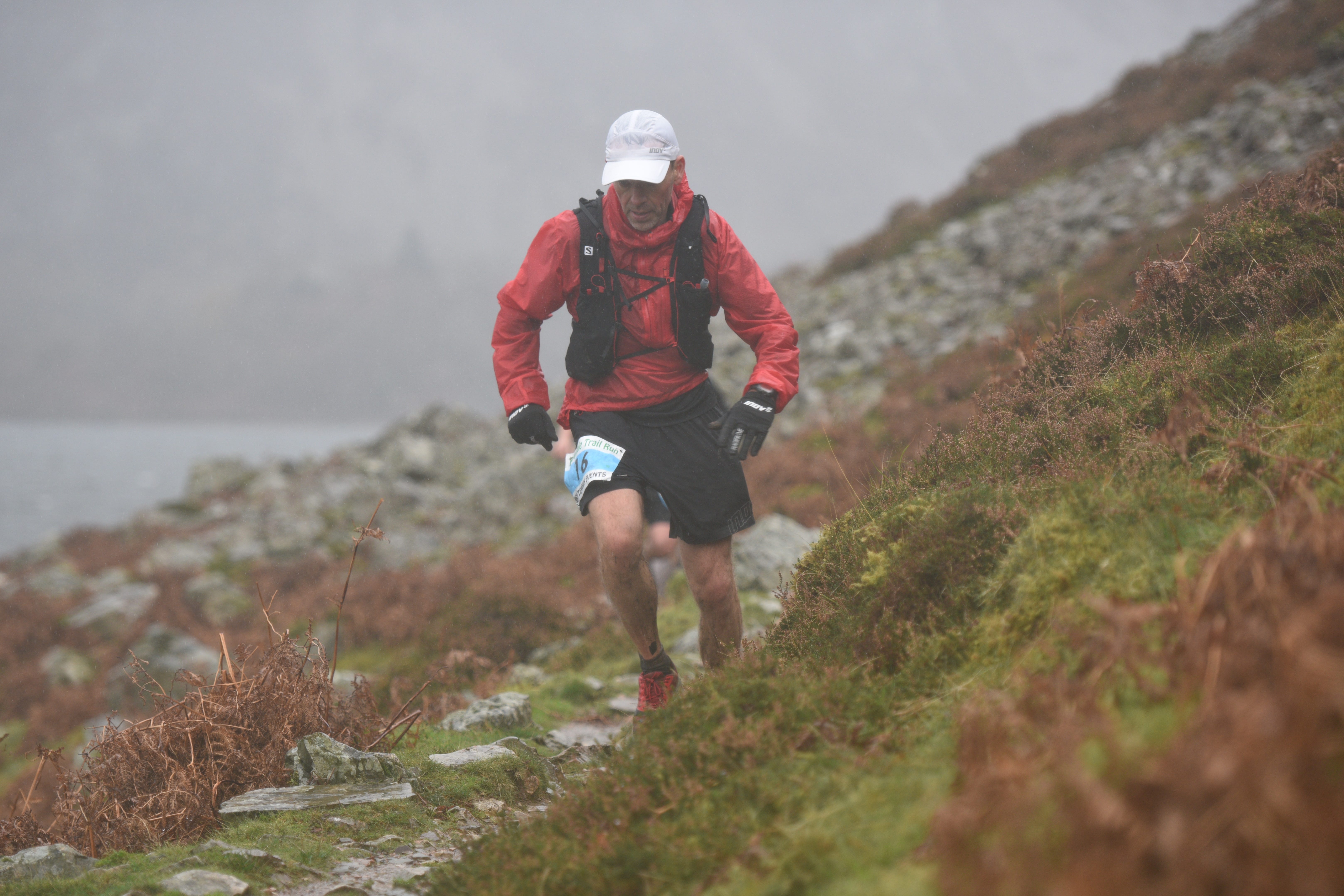
I’d had an extraordinarily busy couple of years, and slowly, almost invisibly, they ate away at my reserves. I was still painting. I was still competing in 100km ultramarathons. Outwardly, everything looked intact. But something wasn’t right. My body and mind began doing strange things. Eventually this led to what is now medically termed burnout.
I won’t describe the sordid details of that experience, except to say that it is not simply a matter of being tired. Recovery has taken three years, and the person who emerged from it feels different: less extreme, lighter, more compassionate, perhaps even deeper.
“Paint, Run, Paint” is a diacope: a rhetorical device in which a word or phrase is repeated with one or more words in between. It creates rhythm, emphasis, emotional intensity. I always liked its simple formality. Each morning I would quietly say to myself: today, just paint, run, paint.
I never completely stopped running, although in hindsight I probably should have. Over a two-year period I made repeated attempts to build my mileage back up. Most of those attempts ended somewhere around fifteen or seventeen miles, when my body would simply say: No. You can’t do this.
It wasn’t my legs that failed me. My muscles and joints were fine. It was my nervous system that shut the door. What followed would usually be a week of exhaustion and sleep.
During that period I stopped saying the mantra. It began to feel hollow, inaccurate somehow. I was still painting and still running, but the phrase no longer described what animated me. I probably drove my friends, doctors and therapists mad with my constant questioning: Why can’t I run anymore?
“Be patient,” they would say. “It will come back. But it may be different.”
I never much liked the sound of that final clause.
Eventually I decided simply to keep running on my usual days, but to drastically reduce the volume. Currently I’m running around fifteen miles a week. Technically, I still run, but calling myself a runner began to feel strangely untrue. It wasn’t really about the mileage. It was about my relationship to it. I was running out of obligation, maintaining just enough fitness so that, when the time came, I could still ask my body to remember what it once knew.
I began to resent the diacope. It had become a sandwich with no filling.
I longed for it to mean something again, for the rhythm of my body to feel alive and necessary. I wanted the beat of my heart to signal challenge and possibility, not another reminder to sit down. I started walking more during runs. The excitement I once felt moving through the East Sussex countryside around my home and studio had vanished. The idea of another mountain ultra felt absurd, almost fictional.
A year of slow, short running didn’t seem to change much. I still had no real desire to run, though my body was at least injury-free again, and my heart could tolerate what I asked of it. Two years earlier I had struggled simply climbing the stairs.
Occasionally I would test myself with an eight- or ten-mile run, just to see how things felt. But my will wasn’t in it. I felt flat, uninterested, impatient for it to end.
Then, two months ago, something shifted.
I decided to train seriously again. Not with huge mileage or grand ambitions, but with attention and discipline. I began increasing my weekly volume by five percent at a time, with an easier week each month, simply to see what might happen.
I started absurdly small: two-and-a-half-mile runs that barely felt like a warm-up. But I treated them seriously. I did only the miles on the plan, no more. Week by week I edged upward. At first, nothing changed. Then every so often I would feel a flicker of lightness in my legs – a small skip, a little bounce. I began searching for new routes again. Better still, I started feeling excited about running. I’ve even caught myself resenting the days I’m not supposed to.
It’s probably too early to say I’m back. And I’m also trying to take seriously the possibility that “back” may not be the point. Perhaps the doctors and therapists were right: perhaps it returns differently.
Will I race again? I honestly don’t know. I’m not sure I want to spend that much time running anymore. But I do find myself drawn towards the idea of running adventures, whatever that might mean now. Perhaps some shorter ultras, simply for the pleasure of them.
We’ll see.
But for the first time in a long while, it feels possible to believe that “Paint, Run, Paint” still describes my life, just in a gentler way than it once did.
I’ll keep you posted.
Note: Since writing this essay a couple of weeks ago, my running has continued to develop. I’ve even started naming the adventures I’m working towards. The first is a twelve-mile loop taking in Scafell Pike in the Lake District. As the highest mountain in England, it feels like an appropriate place to begin again.
Years ago, this would have been a fairly normal training run whenever I visited my sister, who lives nearby. Now it feels different, less like training and more like a quiet declaration: yes, you can run again.
It will probably take me another two or three months to rebuild my fitness properly, but already I can feel the excitement returning. Not just for the summit itself, but for what it represents: the rediscovery of trust in my body, and the simple joy of moving through the world under my own strength once more.
I have been going through a similar-ish kind of experience, mine related to PTSD and nothing to do with running, but experientially adjacent. The part of this that leapt out to me was you mentioning how living through this changed you; "Recovery has taken three years, and the person who emerged from it feels different: less extreme, lighter, more compassionate, perhaps even deeper."
This I recognise very much, this new version of me has much deeper compassion and understanding of others, something I always lacked and tried to develop. I am autistic so that was always very difficult to cultivate, but going through what I did, and having to understand what was happening to me, made me realise that everyone has something they are trying to cope with and make sense of, and gave me great patience with other people's strange behaviour and decisions.
And lighter, I hadn't realised until I read you say it, but the experience has made me lighter in my mind, I am more grateful for the things I used to take for granted, my family and friendships, the landscape around me, a nice walk.
Recovery and rehab (mental, physical and emotional) is very slow going, but continues to go in the right direction. Glad to hear you are making good in roads in your own recovery. The key is to compare yourself to yesterday, not the 'old you'. So keep going my friend, all the best, and thanks for sharing!
Your journey through burnout to rediscovery is deeply moving. There is a quiet strength in embracing change and finding joy again in every step. Wishing you continued peace and excitement on your path ahead.