Longing and Joy
Why We Return to the Studio Despite Ourselves

What a strange thing it is to enter a studio each day and submit to the longing that draws me back, despite the apparent pointlessness of it. I am not entirely sure why I return, nor who, in the end, it is for.
In galleries, I find I can often recognise the posture of my fellow painters. There is a particular gaze that gives them away: a quality of scrutiny, of hunger, a quiet desire for some kind of wisdom that seems to sit just behind their attention. It suggests that we share a certain emotional field, a way of looking that is at once searching and uncertain. This recognition is not entirely comforting. If anything, it can be faintly unsettling, as though it exposes a condition we are all implicated in but none of us fully understands.
Why should the making of art remain such a mystery, even to those of us immersed in it? On the surface, it presents itself as entertainment or as a form of conceptual inquiry, a testing of ideological positions. Yet in its most compelling forms, art exceeds these categories. Something else is at work, something less easily named and resistant to explanation. The studio, for all its promise, is a difficult place to inhabit. It can feel like a graveyard of failures, a site in which one is repeatedly brought up against uncertainty and doubt. Fear is not incidental to this process, but a necessary part of it, it must be encountered and worked through again and again. And yet, despite its capacity to frustrate or undermine our ambitions, we continue to return.
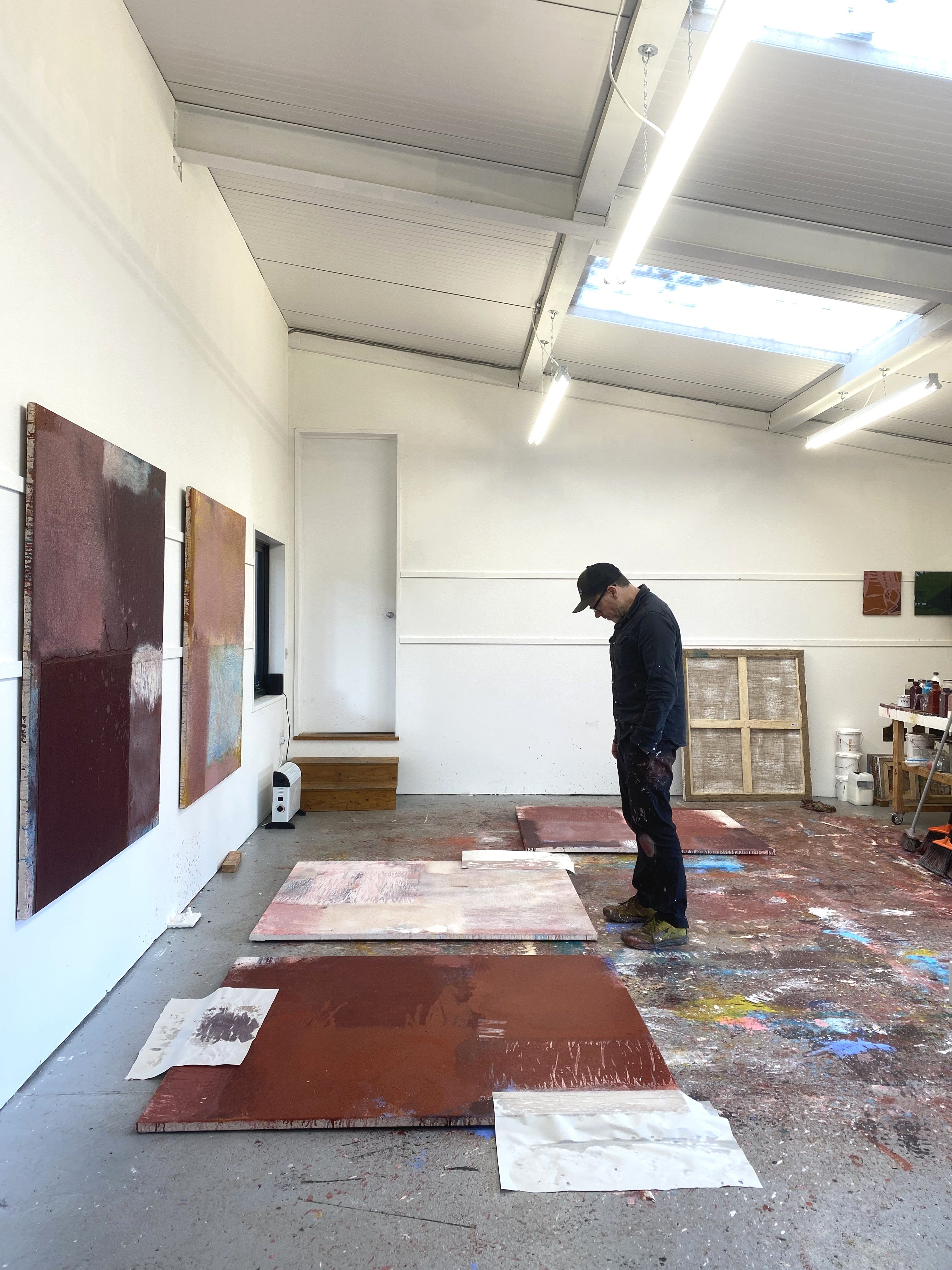
What, then, is shared in this experience? And what, if anything, can be carried out of it and offered to another, to someone willing to look? It may be that what persists is a condition, a trace: an intensity of attention shaped through difficulty. Within this, there is also, at times, a subtle reward. It doesn’t present itself as dramatic joy, nor the satisfaction of success, but something quieter, a fleeting recognition that, for a moment, one has come into contact with something real. It is difficult to name, but compelling enough to sustain the practice. In this sense, longing and joy appear as intimately connected states. Longing is a movement towards wholeness; joy is the brief experience of its arrival. One reaches outward, the other gathers inward. Painting seems to exist in the space between them.
Joy is often mistaken for ease, yet it can emerge within difficulty. Painting exhausts, confuses, and occasionally humiliates. But within that struggle, something aligns: perception, body, attention, and intention briefly coincide. That moment of coherence, fragile and temporary, is what might be called joy. Insight, in painting as in life, does not arrive fully formed. It emerges slowly, requiring humility and persistence rather than certainty. What might be called a spiritual dimension of practice is less concerned with belief than with attention, a sustained openness to what is present. Awakening, if it occurs at all, is the gradual recognition that the ordinary is already saturated with the extraordinary. The studio, makes this visible.
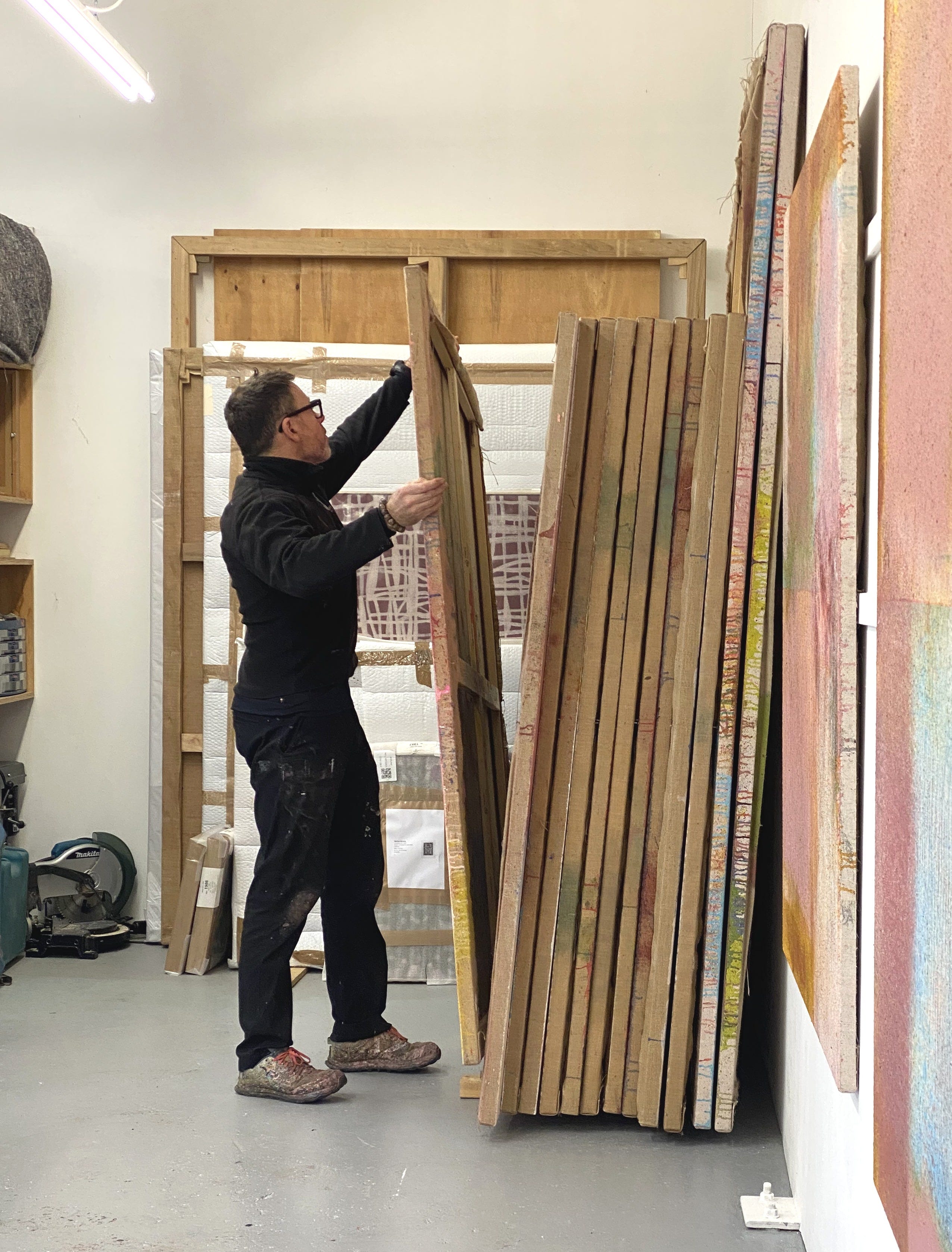
Longing returns each day because painting confronts us with reality in its most immediate form: colour becoming light, gesture becoming meaning, matter becoming experience. Even the smallest actions, mixing a colour, adjusting an edge, shifting an object, carry a quiet sense of mystery. It is not so much that one seeks revelation, but that one learns to notice it. Perhaps longing is simply the recognition that we are unfinished, and joy the fleeting experience of coherence within that incompleteness. The two belong together. Longing provides the impulse to begin; joy, however subtle, provides the means to continue.
And so I return to the studio each day, because however ineffible it is, something there continues to call me towards a deeper participation in being alive.
Again. You are naming my reality. My studio. My longing and joy there. I really think it comes easier to relax and enjoy this at the age of 78. I have no expectations besides experiencing and growing and noticing. The challenge and hope that moves me to continue. Thanks.
It’s this mystery that means I’m in it for the long haul.
I find I can make an analysis, post painting, about why one piece can be considered working and another not. I do this sometimes in a matter of fact way, because I find the kind of fake romantic view of the artist and the bolt of lightning inspiration idea kind of irritating. I tend to think that visual triggers and irresistible juxtapositions in the work are really what we respond to.
That said, when something is really working, in maybe the pieces that seem to happen without our permission, our most “successful” pieces, there is a stage that is much greater than the sum of the parts and it’s a relief when those arrive to remind us why we return. Possibly.